“I don’t have any money, so there’s no point in going to a financial wellbeing talk”
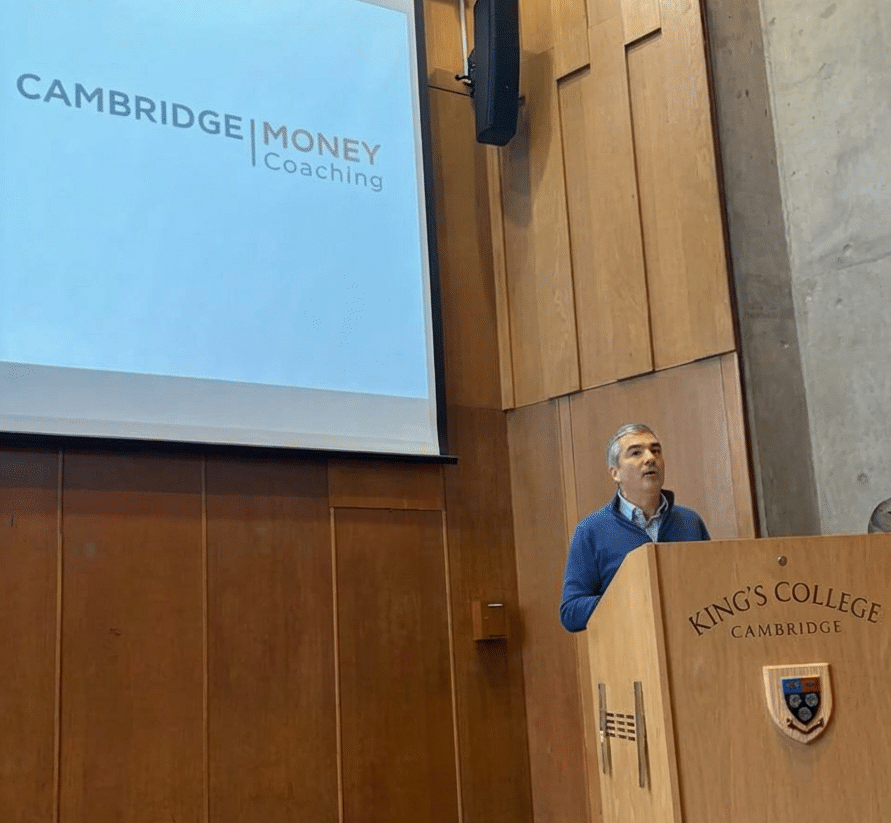
I recently gave a Financial Wellbeing talk to staff at King’s College Cambridge.
It started at 10.30, so not everyone was able to attend.
And some people didn’t think it was worth attending. The quote above came from a member of staff.
So, there are a number of interesting issues here:
Terminology. We freely use terms like ‘financial wellbeing’ and ‘financial freedom’ without really knowing what they mean to other people. We think that people will know roughly what we are talking about, but we should never assume they do.
Judgement. Secondly, when people hear the term ‘financial wellbeing’ they may think they are getting some kind of financial lecture. Financial literacy tends to reinforce a libertarian view of financial wellness, based on individual rather than collective action — one where poverty and debt are less a societal problem and more a consequence of bad individual financial decisions. And this conveniently ignores the fact that nearly everything stems from where you started in life. Financial education itself is typically an austerity gospel. If you’re struggling with your finances, the last thing you want is somebody lecturing you about ‘wants’ and ‘needs’.
Disempowerment. “The heaviest weight in the gym is the front door”.
I don’t have any money, so there’s no point in going to a financial wellbeing talk is the same as saying:
“I’m not fit so there’s no point in going to the gym.”
And that does makes sense because we are hard-wired to avoid discomfort. But, of course, that keeps us stuck where we are. Going to the gym and engaging with your finances are about building good habits. The benefits are in the future, so they are hard to visualize. The pain is in front of you, so it’s far more tangible. Starting is hard and it’s ok to admit that. So, buy a book on building habits or listen to a podcast on it and build yourself a process. Don’t rely on willpower. I really rate James Clear and you can listen to him here.
Narratives. We are the stories we tell ourselves.
“I’m just not good with money”.
“My father was very tight, so that’s just how I am”
“I’ve never been able to save”
“I couldn’t possibly spend that on …”
These stories usually started in childhood and are based on what others told us. Over time, they have become our own internal narratives.
There may be a nugget of truth in there, but these are narratives or stories that have been built over time. And this means they can be changed.
I recently helped a client to build a savings habit. Something they had never believed they could do.
Change your stories and you change your life. With help, we can all do it.
And what about feedback from the financial wellbeing talk? 82% said they will be taking action and one person was kind enough to comment:
“I feel very inspired”.
If you want to explore your financial wellbeing, let’s have a chat
If you want your employees to feel inspired, please contact us.